
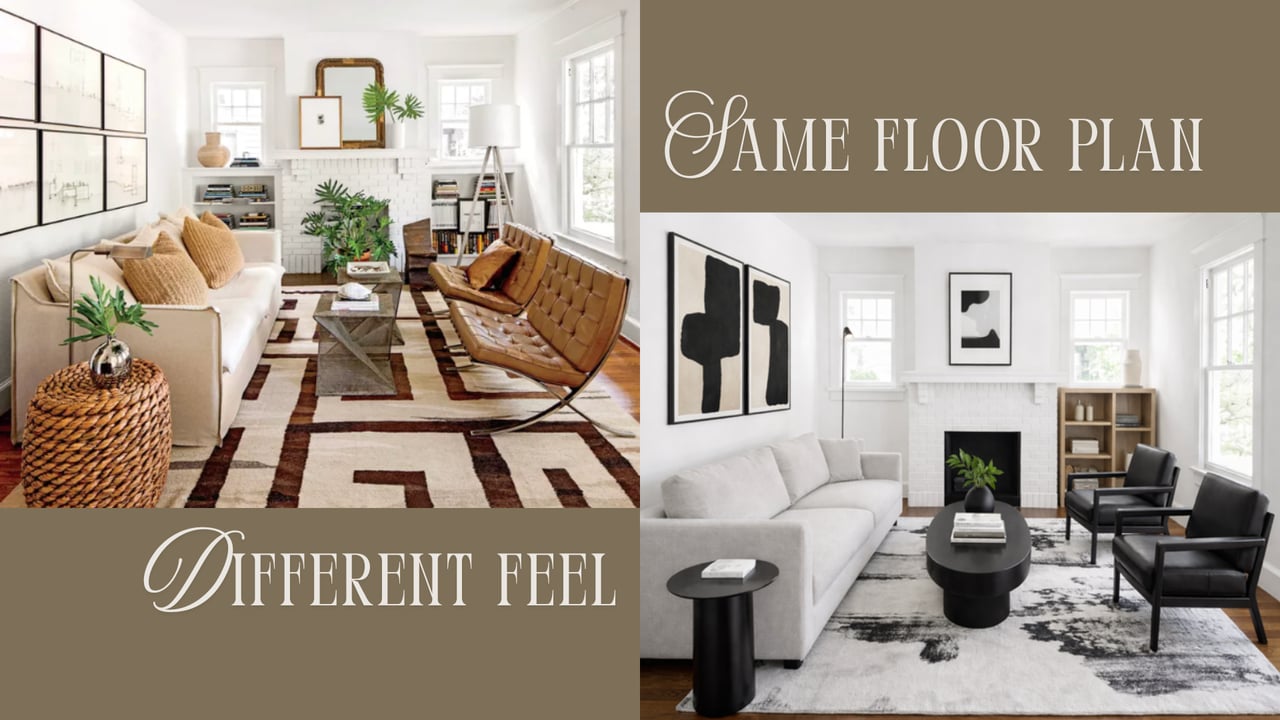
Same floor plan. Same square footage. Same builder. Sometimes even the same street. And yet one sells for significantly more than the other.
On paper, they are twins. In reality, they are not.
Buyers do not purchase floor plans. They purchase experience.
Two homes can have identical layouts, but the way they live can feel completely different. One might face west and flood with late afternoon light. The other might feel shaded and quiet all day. One may open to a lush backyard. The other may look directly into a neighbor’s wall.
Orientation alone can change perceived value.
Then there is condition. Even subtle differences matter. The same kitchen layout can feel elevated in one home and dated in another depending on finishes, maintenance, and how thoughtfully it has been cared for. Buyers can feel the difference between “updated” and “well maintained.” They are not the same thing.
Light is another variable most people underestimate. Natural light shifts mood instantly. A bright living room feels larger. A dim one feels smaller, even if the measurements are identical.
And then there is the emotional layer.
Some homes feel easy. Others feel tight. Some feel calm. Others feel chaotic. That is rarely about square footage. It is about flow, furniture placement, ceiling height, color, and how the home has been presented.
Presentation alone can create a spread in value. Professional staging, decluttering, and thoughtful preparation do not change the bones of a home, but they absolutely influence perception. And perception influences price.
Micro-location plays a role too. One house may sit slightly closer to a busy street. Another may back to open space. One might have more privacy. Another might have more noise. These details rarely show up in a marketing summary, but buyers notice.
Timing matters as well. The first listing may have created momentum and multiple offers. The second may have entered a quieter market window. Even a few weeks can shift demand.
What fascinates me most is that buyers often cannot articulate why they prefer one over the other. They just do.
Real estate is rarely pure math.
It is light. It is noise. It is privacy. It is condition. It is feeling. It is competition. It is timing.
Two identical floor plans may share walls and measurements, but they do not share energy, context, or presentation.
And that is where value lives.
When pricing a home, I do not only look at what the model match sold for. I look at why it sold for that number.